The Best Time to Visit Fiordland
There is no dry season in Fiordland, so the best time depends on what you trade: long days and crowds, or short days and settled skies. This guide weighs the seasons for the Fiordland National Park tours; the month-by-month weather has the figures.
When is the best time to visit Fiordland?
For most visitors, late summer to autumn: February to April. The days are still long, the Great Walks season is still open, and the busiest weeks of December and January are behind you. For clear skies and quiet roads, winter, if you can manage the cold and the chains.
| Season | The road | Weather | Crowds | Daylight |
|---|---|---|---|---|
| Summer (Dec–Feb) | Open; tunnel lights at peaks | 10–18°C in the park | Busiest | About 5:30 am to 9:30 pm |
| Autumn (Mar–May) | Open; winter conditions from May | Rain in any season | Busy to April | Shortening |
| Winter (Jun–Aug) | Snow and ice; chains | Most settled | Quietest | About 8:30 am to 4:30 pm |
| Spring (Sep–Nov) | Avalanche risk to early Nov | Windiest, wettest | Busy from October | Lengthening |
What changes in summer?
Everything is open and everything is busy. DOC says the road is busy from October to April, and December and January of 2025-26 set a record. Day-cruise passengers that December were up 12,117, or 13%, on the year before.
The days are long, from about 5:30 am to 9:30 pm, Visit Fiordland says, so you can start early and still be back in daylight. Summer highs run about 10 to 18°C in the park, DOC says, and Te Anau can reach 30°C. At the tunnel, expect traffic lights and delays of up to 20 minutes.
What changes in autumn?
The road stays free of winter conditions until May. The Great Walks season runs to the end of April, so autumn is the last chance to walk the Milford Track in its hut season.
By May, winter conditions begin on the road, and the days shorten fast. If you want long evenings without the December and January peak, March and early April are the sweet spot.
Is winter worth it?
Yes, if you plan for it. Visit Fiordland calls winter, June to August, the most settled season, often with blue and cloudless skies. That makes it a good season for flights and for the view of the peaks with snow on them.
The cost is the road and the light. From May to September the Milford Road can be icy and snow-covered, and chains may be required; DOC suggests leaving after 9 am. The sun rises about 8:30 am and sets about 4:30 pm, and a July day in the park runs from about 1 to 9°C.
Why does spring feel the wettest?
Because it is the windy season. Visit Fiordland describes September to November as the equinox period, with more wind and rain and snow to low levels. Avalanche risk on the road is highest from late August to early November, DOC says.
Rain in any season still has its reward. Visit Fiordland says the fiords are particularly dramatic on rainy days, with the mist and the waterfalls on full display.
When can you walk the Great Walk?
In the Great Walks season, November to April. The Milford Track is walked one way over 3 nights and 4 days, and in season the huts cost NZ$152 a night for an international adult. You book them ahead; there is no camping.
Outside the season the huts cost NZ$30 a night. For a taste of it on any date, the cruise-and-track day from Te Anau adds an 11 km return walk from the Milford end.
When is the road most likely to close?
In winter and early spring. From May to September the Milford Road can be icy and snow-covered, and chains may be required. Avalanche risk is highest from late August to early November, and the stretch from the Hollyford Road junction to The Chasm is a restricted no-stopping zone for that reason.
If you drive yourself in those months, leave Te Anau after 9 am, as DOC advises, and carry chains. If you are not confident driving on snow and ice, DOC's advice is to take a bus.
What do the long summer days let you do?
Fit a second outing into the same day. With light from about 5:30 am to 9:30 pm, you can take the jet boat in the morning and the champagne cruise on Faith in the evening. Or drive to Milford Sound early and still be back in Te Anau before dark.
Summer also brings the heat. Visit Fiordland says Te Anau can reach 30°C, while DOC puts summer highs in the park at 10 to 18°C. Pack for both.
Does the weather cancel tours?
It cancels flights, not cruises. A flight grounded by weather is rebooked or refunded, so book it early in your stay. The cruises run in the rain; the small-group day from Queenstown operates in all weather conditions.
In winter and spring the road itself can close for snow or avalanche risk. The premium small-group day may then be cancelled, and you get an alternative or a full refund. Our guide to choosing between the fiords goes further.
When do the waterfalls run hardest?
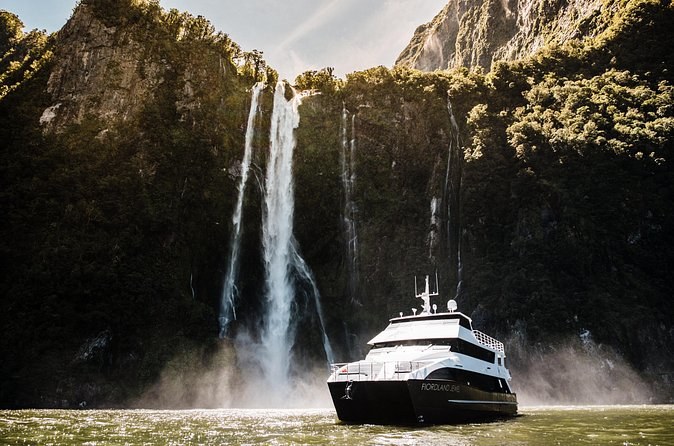
After heavy rain, in any season. Milford Sound takes up to 7 m of rain a year, DOC says, and when it pours, temporary falls run down the walls of the fiord on top of the permanent ones. That is why a wet day is not a wasted one on the water.
The rain also lays a layer of fresh water on top of the sea, stained the colour of tea by the forest, DOC says. Below it, deep-water life grows close to the surface along the walls. You will not see it from the deck. Milford Sound's waters are one of ten marine reserves in Fiordland, DOC says.
Which season suits which trip?
- Summer: the long walks, the evening cruise and two outings in a day. Book ahead for the busiest weeks.
- Autumn: the Great Walk's last weeks, and the fiords with fewer people than at the peak.
- Winter: flights, on the settled days, and the peaks under snow. Take a coach if you do not drive on ice.
- Spring: the waterfalls, and the cruises in the rain. Keep a spare day for wind.
When are the crowds worst?
December and January, on the road and at the terminal. Milford Sound takes over a million visitors a year, DOC says, and the road is busiest from October to April.
Doubtful Sound has no road and far fewer boats, so it stays quiet all year. If you visit Milford Sound in summer, go early, or go by plane, or stay the night on a boat.
What time of day is best?
Early, for Milford Sound. The Queenstown coaches leave town between 6:30 and 7:30 am and have about 300 km to cover, so a Te Anau start and an early cruise put you on the water first. DOC advises allowing 45 minutes to park and walk to the terminal.
Morning, for Lake Manapouri. The lake can turn rough and choppy, particularly in the afternoon, DOC says. The Doubtful Sound day offers an early-departure option that cruises the inner fiord for two hours.
Late afternoon, for an overnight boat. The Fiordland Jewel checks in at the Milford terminal between 2:30 and 3pm, so the evening and the morning are yours on the water. In winter, remember the light: with sunset about 4:30 pm, a day cruise after lunch finishes close to dusk.
What should you pack in each season?
A rain jacket in every season: Fiordland takes about 7 m of rain a year, over about 200 rain-days. Add warm layers even in summer: cold, wind and heavy rain can arrive at any time of year, DOC says.
In winter, add gloves, a hat and, if you drive, chains from Te Anau. In summer, add sun cover and insect repellent. The Te Anau itinerary builds a spare day into every plan for the weather.
Frequently asked questions
When is Fiordland busiest?
When is Fiordland quietest?
What happens if it rains in Fiordland?
Is the Milford Road open in winter?
When can I walk the Milford Track?
Will I see dolphins, seals or penguins?
What should I bring?
Do the cruises run in winter?
Tours for every season
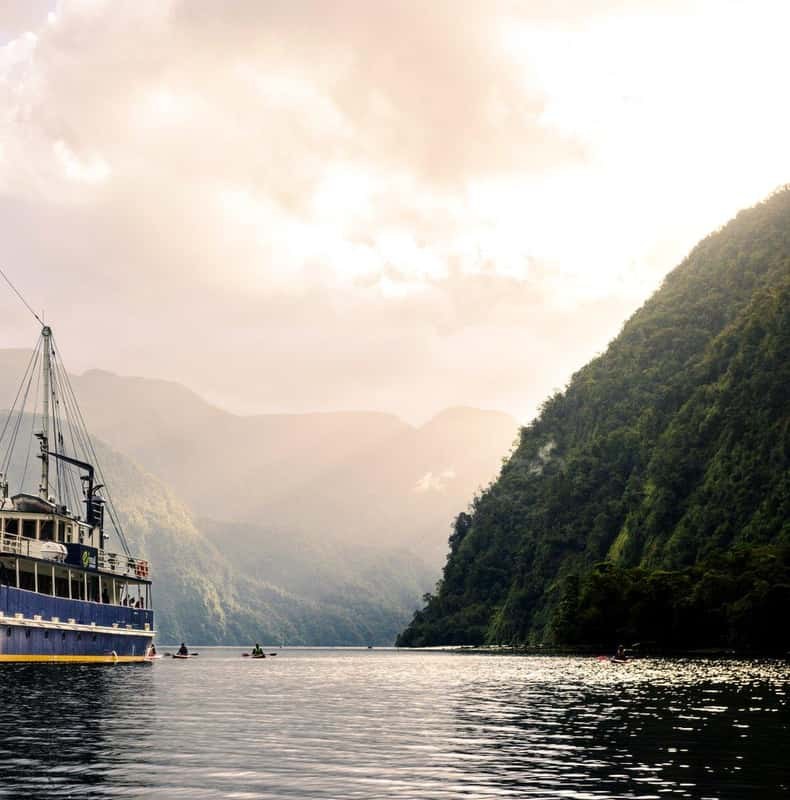
From Manapouri: Doubtful Sound Overnight Cruise
A night on the quiet fiord: the lake and the pass, a cruise on the Wanderer, kayaks or a tender boat, a three-course dinner and a hot breakfast. Full refund up to 14 days before.
From $428 per person
Check Availability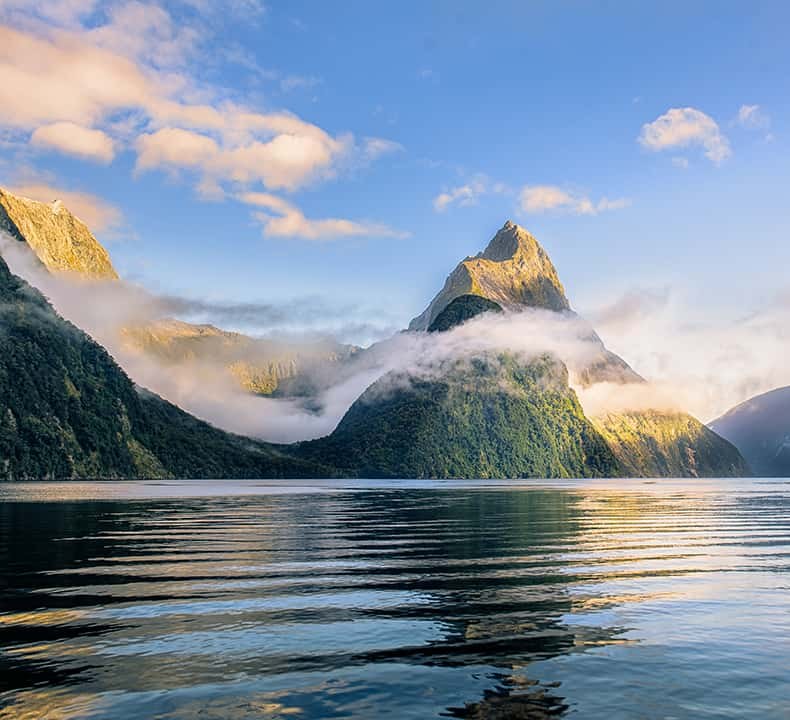
Queenstown: Milford Sound Small-Group Tour w Cruise & Lunch
Eleven hours from Queenstown with hotel pickup, a break in Te Anau, road stops, a 105-minute boutique cruise and a picnic lunch. You can choose to fly back instead of riding the coach home.
From $210 per person
Check Availability
From Te Anau: Milford Sound Cruise & Track Walk by Coach
Coach from Te Anau, a cruise of up to two hours, then a water taxi to the start of the Great Walk for an 11 km return walk to Giant Gates Falls on your own. Bring lunch or add one on board.
From $219 per person
Check AvailabilityNext: Pricing up your dates? Read our guide to Fiordland tour prices. The full range sits side by side on Fiordland Tours.