Fiordland Weather
Hours, prices and access verified by the Fiordland Tours team — last checked 2026-09-21.
Fiordland is one of the wettest places in New Zealand, and the weather decides
parts of your day that no booking can. Rain makes the waterfalls; wind and cloud stop the
flights; snow can close the road. Match the month to the Fiordland guided tours you book,
and keep a spare day if you can.
What the weather does to a Fiordland day
Rain does not stop the cruises. The boats sail in it, and a wet day is when the waterfalls
are at their biggest. Visit Fiordland says the fiords are particularly dramatic on rainy
days. Pack a rain jacket and you lose very little.
What rain and cloud can stop is the flight. The small planes need to see the passes, so a
flight cancelled for weather is rebooked or refunded. On the coach-in, fly-back day you come
home by coach with part of the fare back.
The road is the third thing. From May to September the Milford Road can bring snow and ice,
and chains may be required. Avalanche risk runs mainly from late August to early November.
DOC says to take a bus if you are not confident driving in winter conditions.
Fiordland month by month
The figures are NIWA's long-run normals for Milford Sound, 1991 to 2020, not a forecast.
Visit Fiordland says Te Anau, on the edge of the park, can reach 30°C in summer.
Fiordland weather in January
Highs average 19.5°C and lows 10.7°C at Milford Sound. Expect about 667 mm of rain on 16 days. The wettest month on the normals. The Milford Track is in its Great Walks season, and the road is at its busiest, so book your cruise ahead.
Fiordland weather in February
Highs average 20.0°C and lows 10.7°C at Milford Sound. Expect about 467 mm of rain on 13 days. The warmest month and the one with the fewest rain days. Days are long, with light from about 5:30 am to 9:30 pm in summer.
Fiordland weather in March
Highs average 18.5°C and lows 9.2°C at Milford Sound. Expect about 571 mm of rain on 14 days. Still warm, and the road is still in its busy season. Great Walks hut fees run until the end of April.
Fiordland weather in April
Highs average 15.9°C and lows 7.0°C at Milford Sound. Expect about 528 mm of rain on 13 days. The Great Walks season ends on 30 April. You can still walk a day section of the Milford Track from the Milford end.
Fiordland weather in May
Highs average 12.5°C and lows 4.9°C at Milford Sound. Expect about 645 mm of rain on 16 days. Winter conditions start on the road: snow and ice, and chains may be required. May is the second-wettest month.
Fiordland weather in June
Highs average 9.3°C and lows 2.3°C at Milford Sound. Expect about 440 mm of rain on 15 days. The driest month on the normals. Winter is often the most settled season, with sunrise about 8:30 am and sunset about 4:30 pm.
Fiordland weather in July
Highs average 9.2°C and lows 1.6°C at Milford Sound. Expect about 468 mm of rain on 14 days. The coldest month. Carry chains for the Milford Road, and DOC advises leaving Te Anau from 9 am.
Fiordland weather in August
Highs average 11.2°C and lows 2.7°C at Milford Sound. Expect about 457 mm of rain on 16 days. Avalanche risk on the Milford Road rises from late August. Do not stop between the Hollyford Road junction and The Chasm.
Fiordland weather in September
Highs average 13.2°C and lows 4.1°C at Milford Sound. Expect about 541 mm of rain on 18 days. The spring equinox brings more wind and rain, and September ties October for the most rain days. Pack for wind on the boat.
Fiordland weather in October
Highs average 15.0°C and lows 5.8°C at Milford Sound. Expect about 617 mm of rain on 18 days. The road's busy season begins. Avalanche risk can last into early November, so check the road before you set off.
Fiordland weather in November
Highs average 16.4°C and lows 7.6°C at Milford Sound. Expect about 558 mm of rain on 15 days. The Great Walks season opens on 1 November. The road is busy again, and avalanche risk on the road eases early in the month.
Fiordland weather in December
Highs average 18.5°C and lows 9.7°C at Milford Sound. Expect about 585 mm of rain on 17 days. Summer, and the start of the peak. DOC recorded a record December and January in 2025-26, so book early.
The seasons, and which one you want
| Season | Average high | Average low | Rain | Rain days |
|---|
| Summer: December–February | 19.3°C | 10.4°C | 1,719 mm | 46 |
| Autumn: March–May | 15.6°C | 7.0°C | 1,745 mm | 43 |
| Winter: June–August | 9.9°C | 2.2°C | 1,365 mm | 45 |
| Spring: September–November | 14.9°C | 5.8°C | 1,716 mm | 50 |
Summer gives you the warmest days, the longest light and the Great Walks season. It is
also the busiest time on the road and on the water, so book ahead. Autumn is mild and a
little quieter, and the Great Walks season runs to the end of April.
Winter is the most settled season, Visit Fiordland says, and often blue and cloudless. It
is cold, the days are short, and the road needs care. Spring brings the equinox: more wind and
rain, and snow to low levels. For the full choice by goal, see
our best-time guide.
Book a flight early in your stay. If the weather
cancels it, you have days left to rebook, or to switch to a coach day instead.
Best time of day
If you drive from Te Anau, allow at least two hours for the road and 45 minutes to park and
walk to the terminal, as DOC advises. In winter, DOC suggests leaving Te Anau from 9 am.
The Queenstown coach days leave between 6:30 and 7:30 am and run 11 to 13 hours, so most of the day is the road. On an overnight boat you are on the water at dusk
and in the morning, which a day trip cannot give you.
What to pack for the rain
- A proper rain jacket: every month has rain on 13 to 18 days.
- Warm layers all year: DOC says cold and snow can arrive in any month.
- Insect repellent: pack it whatever the forecast.
- Chains in winter: if you drive, you can rent them in Te Anau.
The rest of the day's kit, from food for the small boats to parking, is in
the visitor guide.
Frequently asked questions
What happens if it rains in Fiordland?
Cruises run in the rain, and rain is when the waterfalls are at their biggest. Fiordland gets around 7 m of rain a year, so pack a rain jacket whatever the forecast says. Scenic flights are the exception: they are rebooked or refunded when the weather closes in.
How much rain does Milford Sound get?
NIWA's 1991-2020 normals put it at about 6,545 mm a year, on about 185 days with 1 mm or more. DOC rounds it to about 7 m, and Visit Fiordland says it has reached 9 m.
What is the wettest month in Fiordland?
January, on NIWA's normals for Milford Sound, at about 667 mm. June is the driest, at about 440 mm, but no month is dry.
What happens if my scenic flight is cancelled?
The flight operators rebook you or refund you in full when weather cancels a flight. On the drive-in, fly-out day you return to Queenstown by coach instead, and the flight part of the fare is partly refunded. Book a flight early in your stay so there is room to reschedule.
Is the Milford Road open in winter?
Yes, but from May to September it can be icy and snow-covered, chains may be required, and a stretch below the
Homer Tunnel is an avalanche no-stopping zone. DOC advises taking a bus if you are not confident driving in those conditions.
What is the best month to visit Fiordland?
February is the warmest month with the fewest rain days, and the Great Walks are open. June to August is the most settled season, often clear and cold, with short days and chains on the road.
Where these facts come from
Temperatures, rainfall and rain days are NIWA's 1991-2020 station normals for Milford Sound
Airport, checked 21 September 2026. The seasons, daylight and rainy-day advice are Visit Fiordland's; the road,
chains, avalanche season and driving advice are the Department of Conservation's. The flight
and refund rules come from each tour's own listing.
Trips to weigh against the forecast
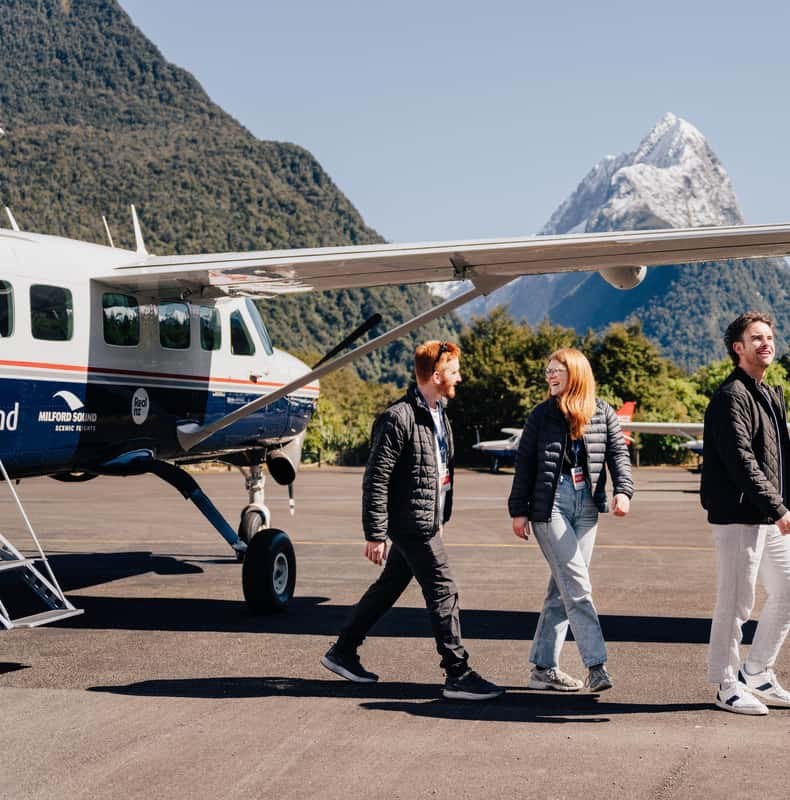
Fly from Queenstown, cruise the fiord for two hours past the peak and the falls, and fly back on a different path: about five hours door to door. Bring your own food.
From $428 per person
Check Availability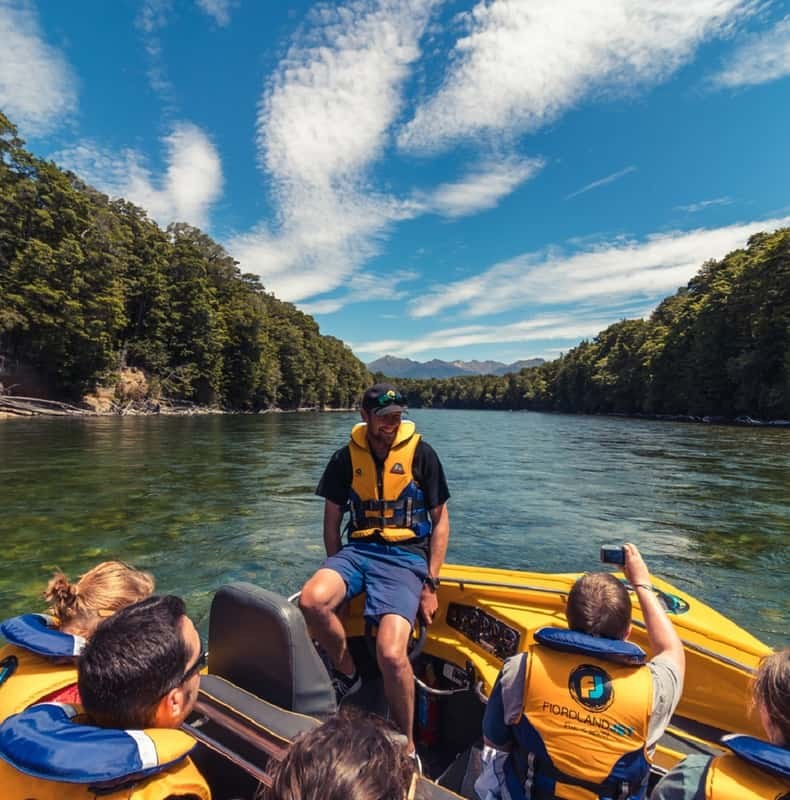
Seventy-five minutes by jet boat down the river from Te Anau to Lake Manapouri, with a 15-minute forest walk ashore. Spray jackets, life jackets and warm gear supplied.
From $117 per person
Check Availability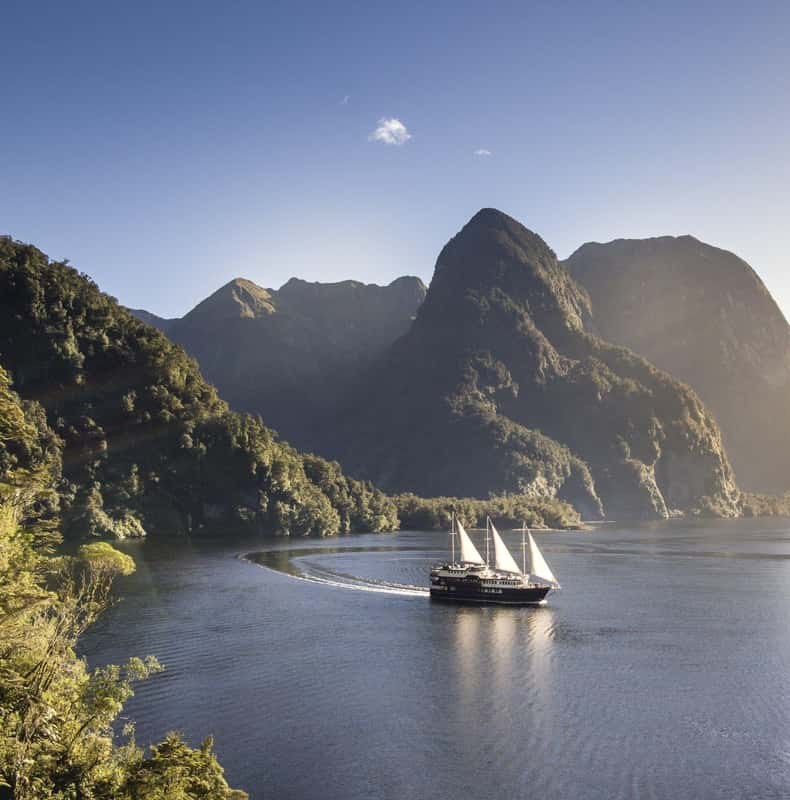
The quiet fiord in a day from Queenstown: 13 hours by coach, lake boat and the pass, with three hours on the water. Food and drinks on sale on board, card only.
From $273 per person
Check Availability